If you’re considering installing air conditioning in your home or business, one of the first questions that often comes up is: Do you need planning permission for Air Conditioning Installation? The answer depends on several factors, including the type of system, the property, and where you live. In this guide, we’ll break everything down clearly so you can move forward with confidence.
In many cases, you do not need planning permission to install air conditioning. Most standard installations fall under what’s known as permitted development rights. This means you can carry out certain improvements without applying for formal approval.
However, this is not always the case.
You typically won’t need planning permission if:
For most modern split or multi-split air conditioning systems, these conditions are usually met.
You may need planning permission if:
1. You Live in a Listed Building
Listed buildings are protected due to their historical or architectural significance. Any external changes—including air conditioning units—usually require approval.
2. Your Property Is in a Conservation Area
In conservation areas, stricter rules apply to preserve the character of the neighbourhood. External units may need permission, especially if visible from the street.
3. The Installation Changes the Building’s Appearance
If the system significantly alters the exterior look of your property, your local authority may require an application.
4. Noise Could Impact Neighbours
Air conditioning units produce some noise. If it exceeds acceptable levels or may disturb neighbours, permission could be required.
5. Commercial Properties
For offices, retail units, or other commercial buildings, planning permission is more commonly needed—especially for larger systems.
While its better to confirm with your local authority, Click Here for Government advice on Domestic Air Conditioning Installations.
It’s important not to confuse planning permission with building regulations approval.
Even if you don’t need planning permission, your installation must still comply with building regulations.
Before going ahead, think about the following:
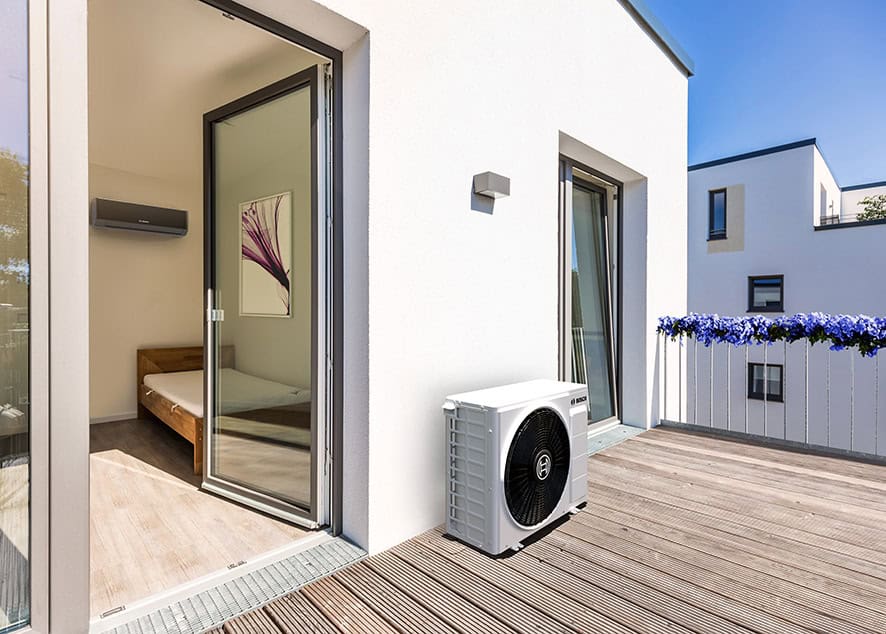
Location of the Outdoor Unit
Choose a discreet location to minimise visual impact and avoid potential planning issues.
Noise Levels
Modern systems are quiet, but placement still matters. Installing units away from neighbouring windows is a smart move.
Professional Installation
Using a qualified installer ensures compliance with regulations and helps avoid costly mistakes.
Check With Your Local Authority
Rules can vary slightly depending on your local council. When in doubt, it’s always best to check.
If your installation does require permission, the process usually involves:
1. Submitting an application through your local planning authority
2. Providing details of the proposed system and its location
3. Paying a small application fee
4. Waiting for approval (typically 6–8 weeks)
A professional installer or consultant can often handle this process for you.
So, do you need planning permission for air conditioning installation?
In most cases, no—but there are important exceptions.
To stay on the safe side:
By taking these steps, you can enjoy the comfort of air conditioning without running into legal or planning issues.
Do I need planning permission for a wall-mounted air conditioner?
Usually not, as long as it meets permitted development guidelines.
Can I install air conditioning in a flat?
It depends. Flats often have stricter rules, and you may need permission from both the council and the building owner.
What happens if I install without permission?
You could be required to remove the unit and may face fines, so it’s always best to check first.
Looking to install air conditioning? Make sure you understand the rules first—doing so can save time, money, and stress down the line.

Matt Hughes is the Managing Director of Platinum Boiler Installations and his mission is to make boiler installations as simple and hassle-free for customers as possible. What Matt doesn't know about boilers simply isn't worth knowing! Connect with Matt Hughes on LinkedIn >>